Prepare your Airbnb for a private hibachi chef

Step-by-step checklist for vacation rental hosts on 30A and Destin — space, power, parking, HOA notes, guest communication, and cleanup expectations before hibachi night.

Overview
· 9 min read · Hibachi Five Star
TL;DR
Clear a level hard outdoor surface, confirm a working outdoor outlet, send current gate codes, and pick a covered rain backup. The chef brings the grill, ingredients, show, and cooking-area cleanup. The host provides tables, chairs, plates, utensils, napkins, and access. Send setup photos at least 48 hours before service.
Why advance prep makes or breaks the hibachi night
Beach houses have distinct personalities, and none of them were designed with a commercial hibachi grill in mind. Soft sand paths that swallow rolling carts, tight elevator lobbies where two people and a cooler already feel cramped, HOA quiet hours that kick in at ten o'clock sharp, and gate codes that expire mid-stay — these are not hypothetical worst-case scenarios. They are the weekly reality of hosting a private chef experience in a 30A or Destin vacation rental. A ten-minute prep checklist, run through before the chef ever backs a vehicle into the driveway, is the difference between a seamless dinner that guests rave about in the five-star review and a night where the show starts thirty minutes late because nobody thought about the extension cord situation.
The good news is that most of what makes a rental ready for hibachi is stuff you already know about your property. You know where the outdoor electrical outlets are and whether they actually work. You know whether the HOA has strong opinions about cooking appliances on the deck after dark. You know whether the parking configuration can accommodate a chef's vehicle alongside guest cars without blocking a neighbor's driveway or violating community parking rules. The checklist below turns that institutional knowledge into an actionable run-of-show that protects your property, keeps your guests happy, and makes the chef's job straightforward enough that the dinner flows exactly as planned from salad through the final protein.
What surface does a private hibachi chef need?
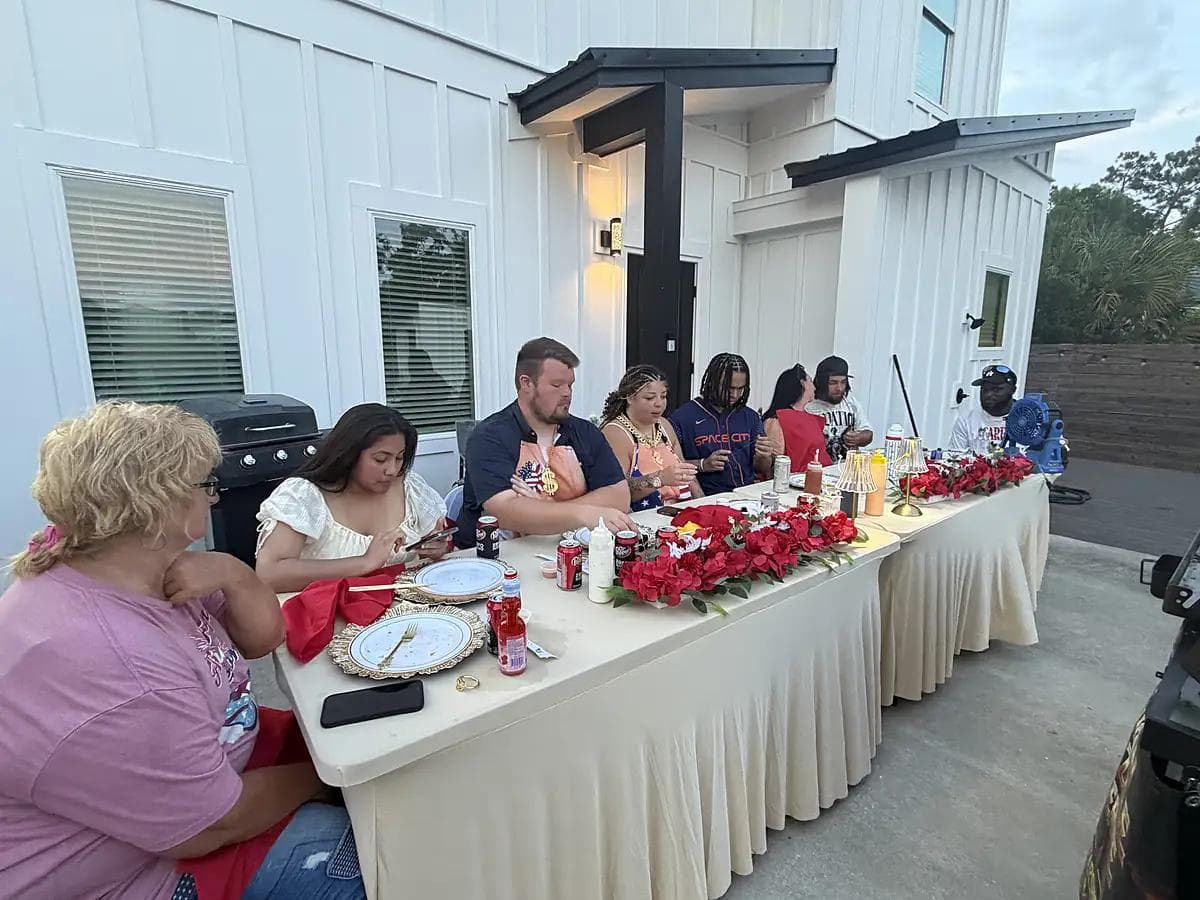
Clear a level hard surface for the commercial hibachi grill. This is the single most critical item on the entire preparation checklist. Covered patios, concrete driveway pads, and sturdy decks with adequate overhead clearance all work beautifully for a hibachi setup. Uneven grass, soft sand, gravel that shifts under weight, and any surface that slopes more than a few degrees in any direction are immediate dealbreakers — the grill must sit perfectly level for safe operation, and the chef needs stable, confident footing for over an hour of active cooking and performance movement. Walk the intended setup area before the booking is confirmed and look at it through the lens of a heavy piece of equipment that generates intense heat and absolutely cannot wobble, tilt, or shift during service.
Low-hanging string lights, ceiling fans mounted on short lanai roofs, and tree branches dangling over the grill zone are the most common setup blockers that hosts discover too late. The chef needs vertical clearance for the full cooking show — utensil flourishes, controlled flame work, and the general theatrical movement that makes hibachi entertaining rather than just efficient. If your beautiful Edison bulb string lights hang at eye level over the patio table where your family normally eats dinner, that exact spot is not a viable grill location without relocating the lights or choosing an entirely different surface. Identify at least two potential cooking locations during your preparation walkthrough: one covered surface for weather flexibility and one uncovered backup for clear-weather evenings when the open sky adds to the atmosphere. Having a designated backup surface is not paranoid overplanning — it is practical planning in a climate where a thunderstorm can build and break in under thirty minutes.
Step two — power, water, and the practical infrastructure
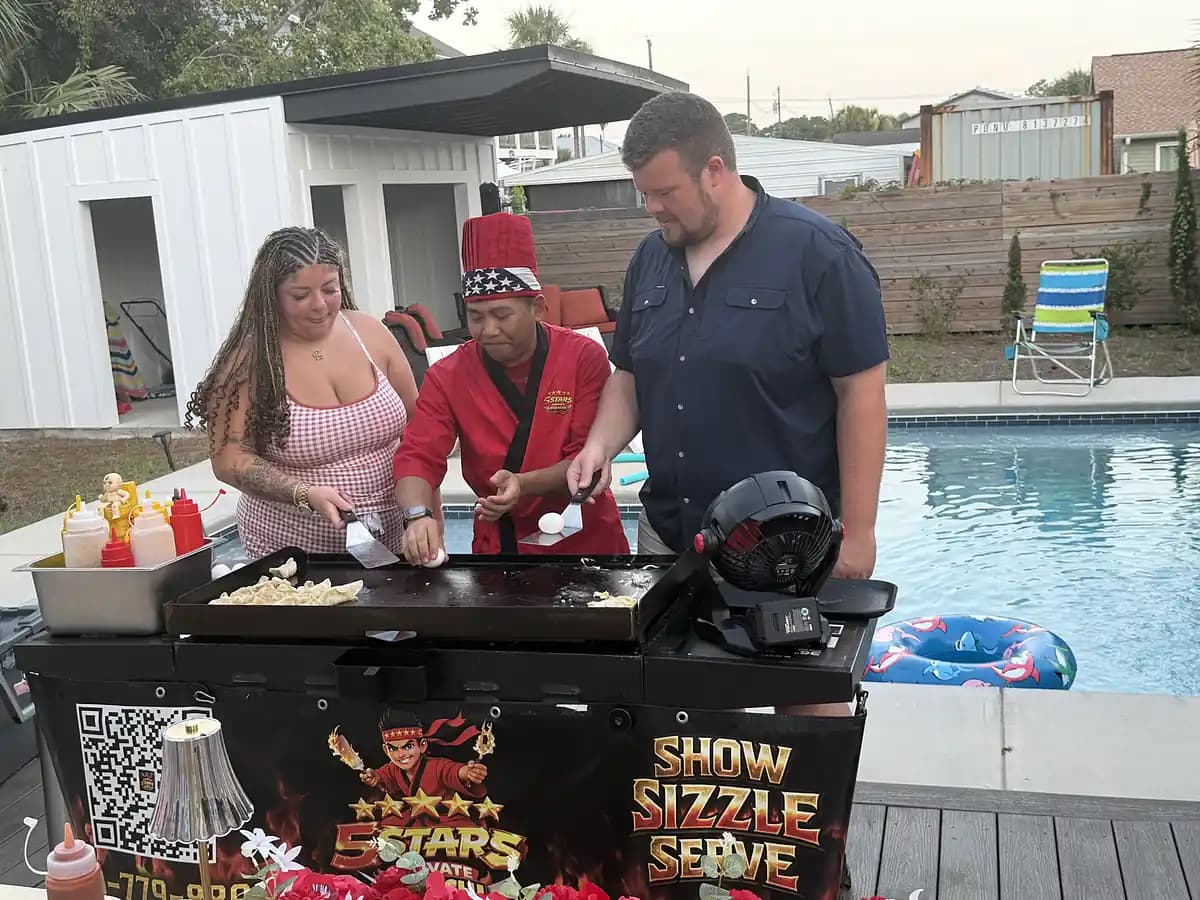
The chef needs access to a standard outdoor electrical outlet within extension-cord reach of the cooking surface, or an indoor outlet close enough to the outdoor setup area that a cord can run safely without crossing active footpaths, door thresholds that close, or areas where guests will be walking during the evening. Confirm the outlet actually works before the chef arrives — tripped GFCI breakers on outdoor circuits are surprisingly common in beach rentals where salt air corrodes electrical contacts faster than expected. If your outdoor outlets are all on a single circuit that also runs the pool pump, landscape lighting, or the outdoor refrigerator, mention that detail in advance so the chef can plan power draw accordingly rather than tripping a breaker mid-service when the rice is halfway done.
Access to a sink for hand washing and basic rinse work is expected, and knowing which bathroom or kitchen sink the chef should use — and which hand towel to grab — keeps everyone comfortable and the workflow smooth. If the rental has an outdoor kitchen or wet bar with a working sink, even better, but this is a bonus rather than a requirement. The chef brings a fully self-contained commercial setup designed to operate independently of a full residential kitchen. What they need from the property is a working power source, a water access point, and a clear level surface. Everything else — the commercial grill, the fuel, the fresh ingredients in temperature-controlled coolers, the cooking tools, the house-made sauces, the serving ware used during the cooking process — arrives with the chef and departs with the chef.
Step three — parking, access, and the load-in route
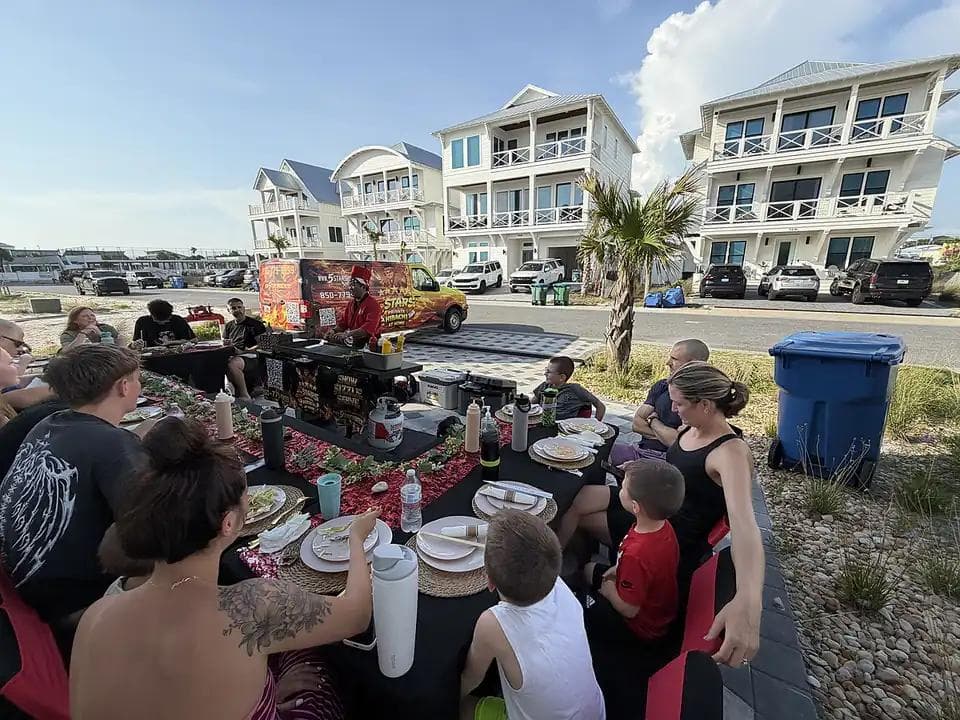
Confirm where the chef should park and communicate that location clearly before arrival day. A driveway spot near the kitchen entrance or the closest access point to the cooking surface is ideal for unloading equipment. If the driveway is narrow, stacked with guest cars in creative configurations, or the house sits at the end of a long boardwalk with no direct vehicle access to the back deck, plan the load-in route in advance and share it with the chef. The chef is bringing a commercial hibachi grill, ingredient coolers, a full tool kit, and setup equipment — not a single duffel bag that fits under one arm. A clean, unobstructed path from the vehicle to the cooking surface, with no soft sand crossings and no narrow gates that require turning equipment sideways, keeps the setup efficient and the chef on schedule for the agreed start time.
Send gate codes, elevator instructions if applicable, preferred parking locations, and a clear photo of the outdoor cooking area to the chef at least forty-eight hours before the event. If the rental uses a keypad that resets between guest stays, or a community gate code that rotates weekly, verify the current code actually works before sending it. If the chef arrives to a gate code that expired that morning at ten o'clock, dinner starts late while someone scrambles to reach the property manager who is off duty until Monday. If the elevator is compact — common in three-story beach houses where the service elevator is more of a dumbwaiter with high ceilings — mention that. Proteins, gear, and equipment need a clean route from vehicle to cooking zone, and knowing that a narrow staircase is the only path up to the deck matters for timing, loading strategy, and staging decisions.
Step four — HOA rules, property restrictions, and vendor access
Before you book a private chef for your rental, confirm the HOA or property management rules around outdoor cooking, open-flame appliances, and commercial vendor access on the property. Some communities have specific language about what constitutes an allowable cooking appliance and at what hour any outdoor cooking activity must conclude. Most 30A and Destin communities are reasonable about private chef services — this is not a backyard pig roast with a rented smoker running for eight hours — but a few have blanket restrictions written into covenants that are worth discovering before a deposit is paid and the date is committed to the calendar.
If your rental is located in a gated community, confirm that the chef's vehicle can be added to an approved vendor or guest access list. Some communities require a property manager or owner to submit vendor names at least twenty-four hours in advance for security clearance. Others issue temporary passes at the gate with a quick verification call to the owner or the listed property contact. These details seem minor until they suddenly are not — a chef who cannot get through the security gate is a chef who cannot reach the house, and that is a problem nobody wants to troubleshoot at five-thirty on a Saturday evening while hungry guests are sitting on the deck waiting for dinner to start. A quick call or email to your HOA or property manager during the booking process eliminates this entire category of risk before it has a chance to materialize.
Step five — communicating the plan to your guests
Tell your guests the confirmed start time at least a day in advance. Remind them to dress for outdoor evening air — beach towns cool off noticeably faster than inland Florida once the sun drops below the horizon, and a light layer makes the difference between comfortable and chilly during the later courses. Communicate any protein choices you have already locked in with the chef so guests know what to expect on their plates and can plan their appetites accordingly. If guests need to provide their own beverages or help set the table with plates and utensils before the chef arrives, say that explicitly and well ahead of the event day, not in a group text sent twenty minutes before the grill fires up. The hibachi dinner operates best when guests gather a few minutes before the scheduled start, seated and attentive, rather than trickling in from the beach over a twenty-minute window while the chef tries to time the first course around empty chairs.
Mention any children's seating needs, food allergies, and dietary restrictions to the chef before the event so ingredients can be staged correctly and the cooking sequence can be planned to account for cross-contact concerns. If a guest has a severe shellfish allergy, the chef needs to know before the grill is hot so that proteins are cooked in a safe order and a dedicated section of the flat-top can be managed separately if needed. Send a quick reminder message the morning of the event: confirmed start time, what to wear, where to gather, and any small items guests should bring. That message takes thirty seconds to compose and prevents the guest who genuinely did not realize they needed to be back from the beach by six from becoming the single reason the entire show starts behind schedule.
Step six — the rain backup plan, because this is Florida
If your rental has a covered outdoor space — a deep covered lanai, a screened porch with enough overhead clearance for the grill and the chef's movements, a garage bay that can be cleared and ventilated with open doors — identify it as Plan B before the booking is confirmed and tell the chef it exists. Covered surfaces solve the vast majority of coastal weather issues because summer storms on the Emerald Coast tend to be intense but brief. A covered patio turns what would otherwise be a stressful cancellation into a slightly adjusted setup that keeps the evening entirely on track and the dinner timeline intact.
If covered outdoor space is not available at your rental, discuss flexible start windows with the chef during the booking conversation. Many summer storms blow through in thirty to forty-five minutes, and simply pushing the dinner start time back by a short window is often enough to wait out a squall and proceed under clear post-storm skies. Our weather and cancellation policies are written with coastal storm realities in mind — dangerous weather that creates genuine safety concerns is handled case by case with safety as the first and non-negotiable priority, and reschedule options are always explored when feasible. The key is having the weather conversation before the forecast looks threatening, not when lightning is already visible over the Gulf and guests are nervously refreshing radar apps on their phones.
Step seven — seating, sight lines, and kids around the grill
Plan guest seating in a loose U-shape or two focused rows positioned around the grill station so every guest can see the cooking surface and the show without crowding the chef's active work zone. Hibachi is interactive live theater as much as it is dinner service, and sight lines determine the experience for the back row every bit as much as the front. Guests who cannot see the grill are guests who will instinctively stand up for a better view, which narrows the chef's movement radius and creates genuine safety concerns around a hot commercial cooking surface. Assign seats to small children before the show starts so little ones are positioned safely on outer rows with parents seated between them and the grill, not wandering mid-flip or mid-flame. Keep a clear walking perimeter around the grill — the chef moves constantly during service, and that movement zone is not a shortcut to the cooler, a path to the bathroom, or a spot where someone left their beach bag.
If children under five will share adult meals rather than ordering the separate Rising Star Kids meal, include them in the seating plan and event headcount so the chef knows the total number of bodies around the table. Kids meals for ages five to twelve are thirty dollars each and are designed to be a proper dinner — fried rice, grilled vegetables, a protein, and dipping sauces — not a stripped-down children's plate that leaves a hungry ten-year-old searching through snack cabinets an hour later. Plan exactly where the youngest children will sit relative to the grill for safety, and brief all parents on keeping the walkway completely clear during the show. A little advance attention to the viewing geometry — seat heights, line of sight, no obstructions between guests and grill — makes the difference between every single person seeing the onion volcano erupt and the back row seeing the back of someone's head for ninety minutes.
Step eight — after-service cleanup and what the host actually does
With full cooking-area cleanup included in the private hibachi service, your post-dinner responsibilities as the host are refreshingly minimal. The chef completely packs out the commercial grill, all cooking tools and utensils, ingredient containers, and any waste generated during food preparation and cooking service. The host resets the guest furniture — tables and chairs go back to their original positions — and handles any guest-generated trash like used paper plates, cups, and napkins that guests used at the table during the meal. Guests transition naturally to dessert on the deck, the pool area, or the hot tub while the cooking zone is broken down and returned to its pre-event condition, usually within thirty to forty minutes of the final course.
This point deserves emphasis because hosts who have never booked a private chef service before consistently overestimate the mess and underestimate how thoroughly clean the exit really is. The chef is not cooking inside your rental kitchen, so there are no greasy stovetops to degrease, no ovens to scrub, and no sink piled with prep dishes and sauce-smeared mixing bowls. The outdoor grill surface is completely disassembled and removed from the property. The only evidence that an elaborate dinner happened in that spot is a group of happy, full guests — and maybe the faint, pleasant residual scent of garlic butter and toasted sesame that, in a beach house after an exceptional meal, registers as an amenity rather than a problem.
The five-minute morning-of final sweep
The morning of your hibachi night, walk the full preparation checklist one more time. Confirm the outdoor electrical outlet works by plugging something into it. Check that the designated cooking surface is cleared of lounge chairs, pool floats, the half-finished puzzle someone started on the patio table, and the stack of beach towels drying over the railing. Verify that the gate code still functions by testing it. Make sure the assigned parking spot is available and not blocked by a guest's car that got parked there overnight. Confirm your guests know the exact start time and what to bring — usually nothing more than themselves, a drink if they prefer something specific, and a willingness to sit back and be entertained for ninety minutes. That five-minute verification sweep is your insurance policy against the entirely avoidable friction points that turn an easy dinner into a stressful scramble.
If your vacation rental is on 30A, in Destin, Santa Rosa Beach, Miramar Beach, or anywhere in the beach communities along Northwest Florida's Emerald Coast, the preparation work for a private hibachi night is refreshingly straightforward because the service is designed around the standard realities of your property type. Covered lanais, outdoor GFCI outlets, driveway parking pads, multi-level beach-house floor plans, and community gate protocols are not exotic variables to an experienced local chef who works this market every week — they are the normal operating environment. Explore our vacation rental hibachi options, review how hibachi at home works, or use the Panama City Beach hibachi guide for PCB-specific rental, condo, access, and setup considerations. When you are ready, book your rental hibachi night before the peak-season calendar fills. Call us at 850-779-8899 with questions about your property setup.
Frequently asked questions
What does the host need to provide for private hibachi?
Can a private hibachi chef cook on the sand or grass?
Do HOAs on 30A allow a private hibachi chef?
What if it rains on hibachi night?
Verified customer feedback
Read these reviews on Google Maps
“The best experience! We loved it for a bride to be!”
Alexandra Wyman
Google Maps · 5-star review
Open this review on Google Maps
“10 stars for 5 Star Hibachi!!! They couldn’t have been more fun, kind, prepared + the food was delicious!!! Highly recommend for at home hibachi ❤️”
Ansley Porter
Google Maps · 5-star review
Open this review on Google Maps
“They are so fun! Great food too. Dinner and a show”
Delaney
Google Maps · 5-star review
Open this review on Google Maps
Review source: Read all reviews on Google Maps