How to Plan a Hibachi Party at Home: A Practical Host Guide

Plan an at-home hibachi party with a clear setup, guest list, menu process, rental access plan, weather backup, and day-before checklist.
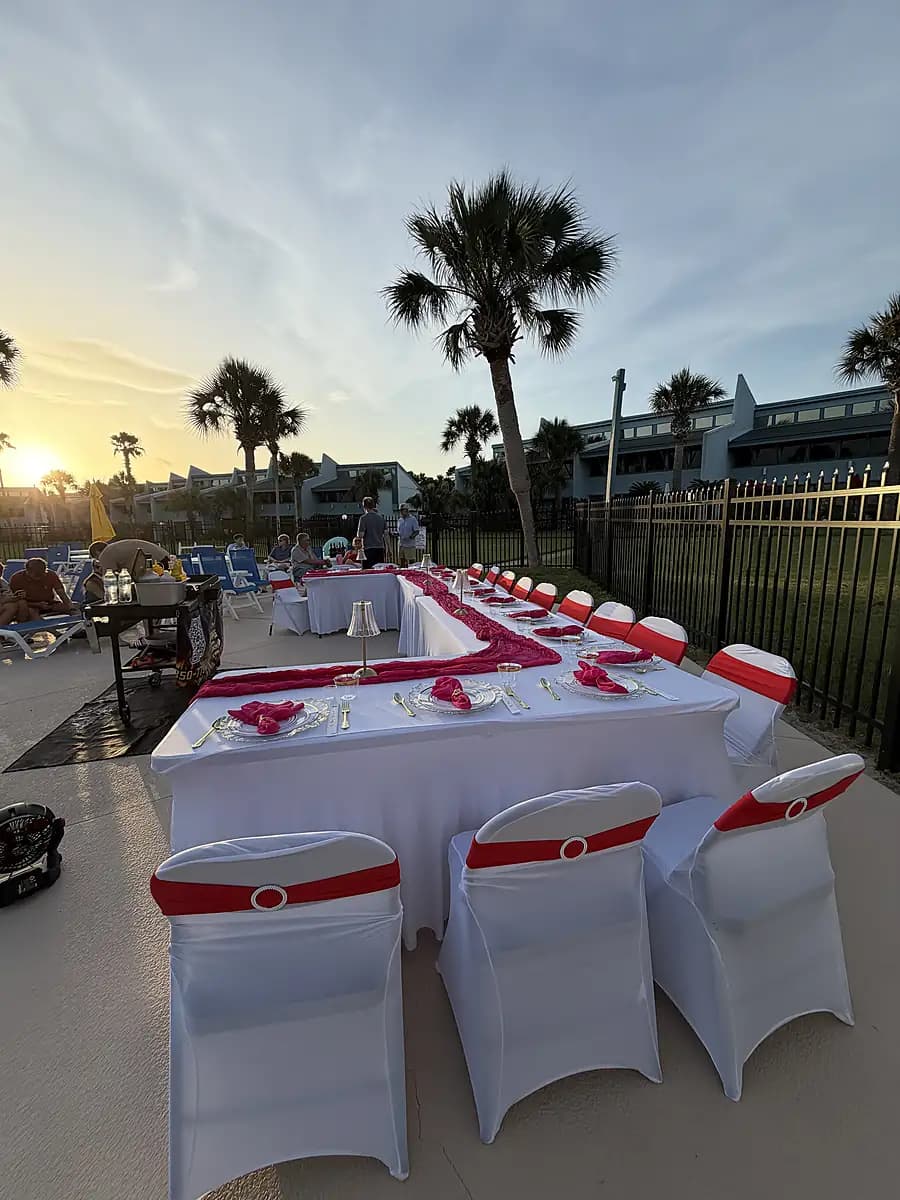
Overview
· 10 min read · Hibachi Five Star
TL;DR
Confirm the venue and outdoor-cooking rules first, then settle the guest count, menu, seating, access details, and weather backup. A mobile hibachi chef can bring the grill, ingredients, cooking, and cleanup, while the host usually handles the approved space, tables, chairs, plates, utensils, and guest communication. Ask your provider to confirm the final setup rather than relying on a generic measurement online.
Start with the venue, not the menu
Before comparing packages, look at where the cooking will happen. A patio, driveway, courtyard, covered outdoor area, or other level hard surface may work, but the property owner or manager has the final say about outdoor cooking. If you are staying in a vacation rental, ask about grills, open-flame equipment, quiet hours, and any restrictions on moving furniture. A listing that says “grill available” does not automatically approve a separate mobile cooking setup.
Take two or three photos in daylight: one wide view of the proposed cooking area, one view of the route from parking to the setup, and one showing anything overhead. Send them to the provider before the event. Photos answer practical questions much faster than “the patio is pretty big.” The chef can then flag access, surface, or layout concerns before everyone is dressed for dinner.
Do not guess at exact clearances. Equipment and venue conditions vary, so ask the provider what they need around and above the grill. If the first location is not suitable, choose a second option early rather than trying to solve it during setup.
Know what the chef brings and what the host provides
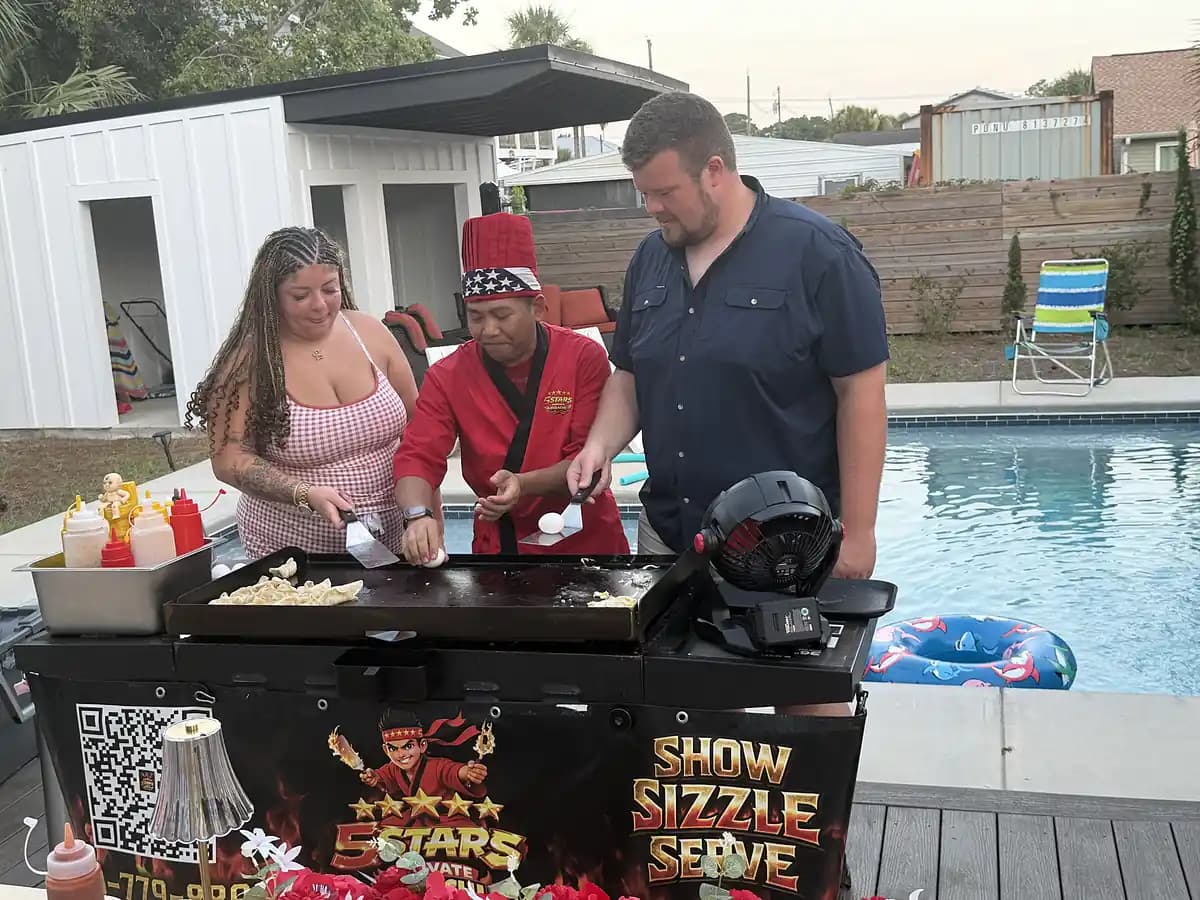
At-home hibachi is a mobile dining service, not a restaurant table delivered in one piece. Hibachi Five Star’s official booking site says the chef arrives with the grill, ingredients, cooking, entertainment, and cleanup. It also asks the host to have a table, chairs, plates, and utensils ready; table and place-setting rental is listed as an optional add-on on the current menu.
Confirm the division of responsibility when you book. Ask specifically about serving ware, napkins, water, ice, beverages, trash, table coverings, lighting, and any rental package. These small items vary among providers and are easier to settle in one message than through assumptions spread across the group chat.
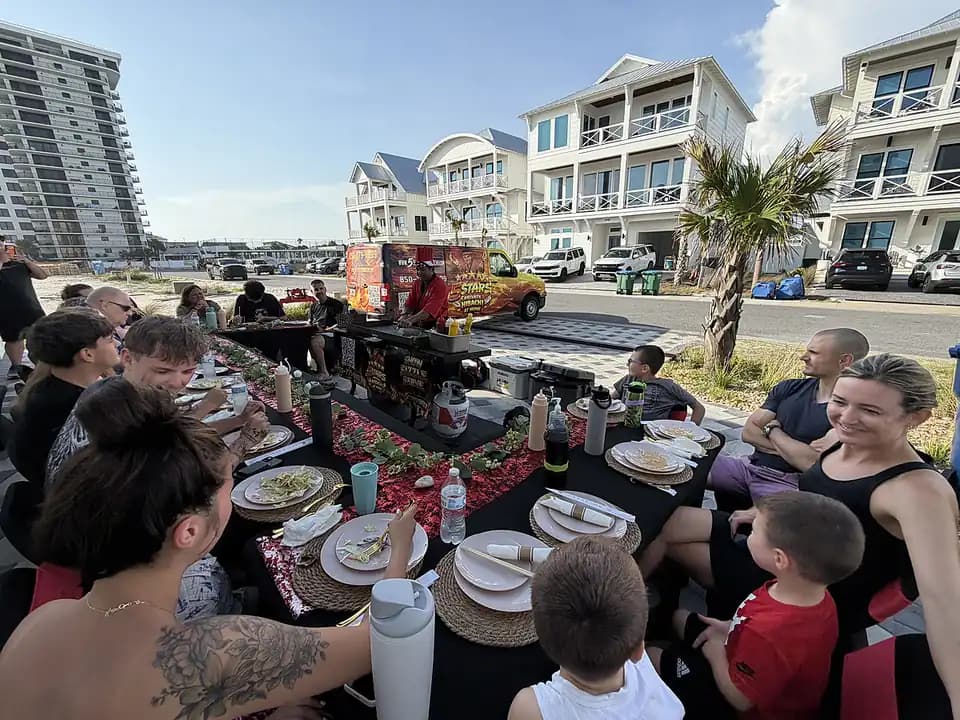
Keep drinks and self-serve snacks on a separate table. That reduces traffic through the cooking area and gives late-arriving guests somewhere obvious to go. If the house has a narrow deck or only one exterior door, plan the service path before placing coolers, decorations, or gift tables.
Plan the seating around the experience
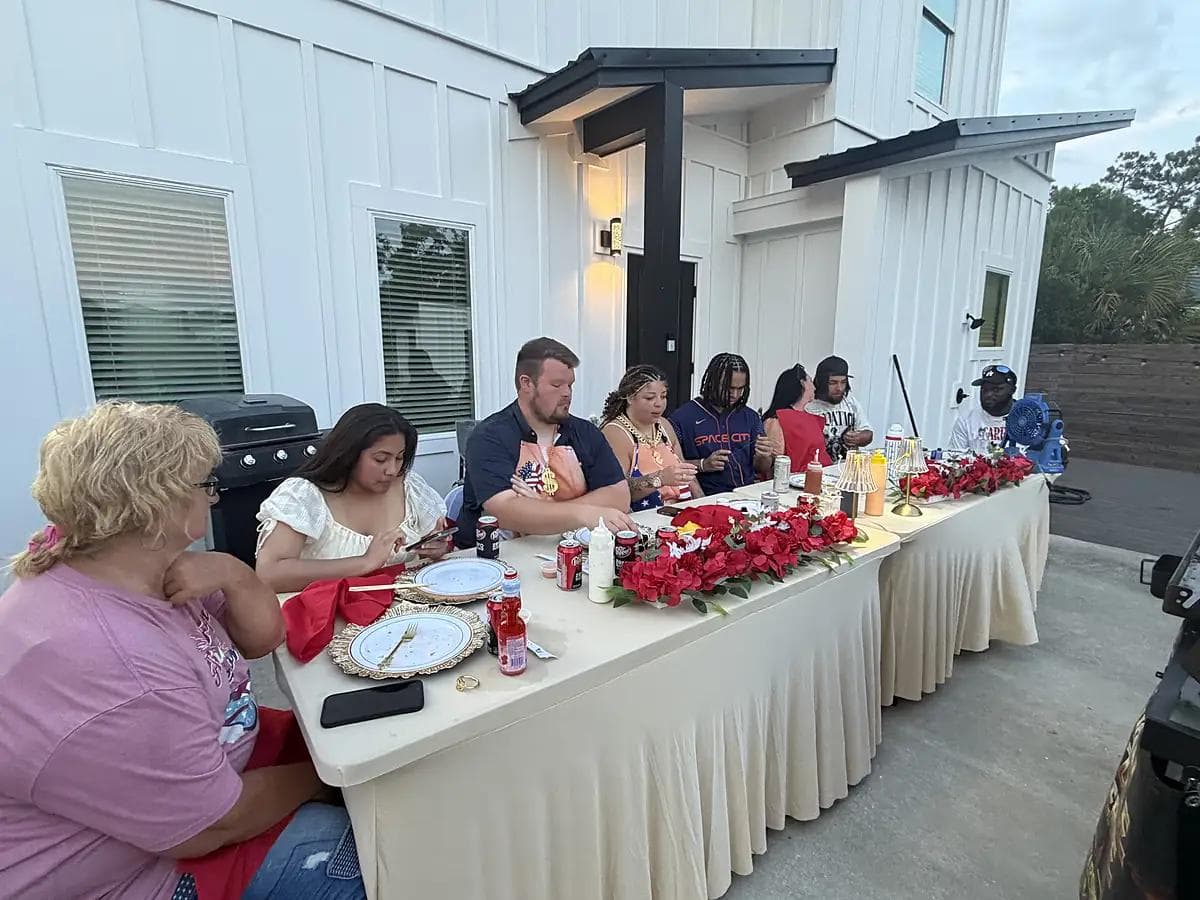
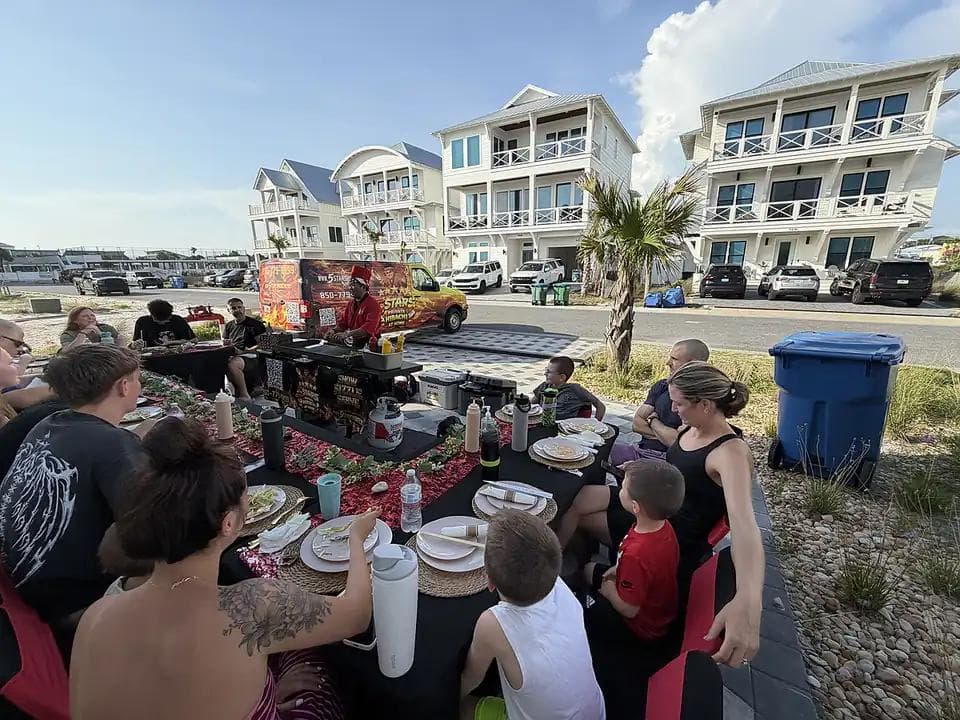
The grill is both the kitchen and the focal point, so sightlines matter. Arrange guest tables so people can face the chef without blocking the route used to bring in equipment. Avoid creating a tight ring that leaves no working room. The provider should approve the final arrangement because grill style, group size, and property layout differ.
For a mixed-age group, think about comfort as well as the show. Place guests who need easier access near the clearest entrance. Keep small children with their supervising adults, and ask the provider where the guest boundary should be. If someone would rather avoid the busiest part of the evening, give them an end seat with an easy path away from the table.
Lighting is easy to overlook in a beach house. Test the space at the same time of day as dinner. Guests should be able to see their food and walk safely without aiming a harsh floodlight directly at the chef or everyone’s faces. Battery lights elsewhere on the deck may help, but keep loose cords and decorations out of the equipment path.
Build the guest list before collecting protein choices
Start with the number of people who will eat, then note adults, children, and anyone who may only attend part of the evening. Do not apply an age-based rate from an old screenshot or social post. Use the provider’s current menu and ask how they define each package before collecting payment from your group.
Next, gather each guest’s menu choice in one shared list. Use names rather than totals alone: “Maya — chicken and shrimp” is more useful than “seven chicken.” If someone reports a dietary restriction or food allergy, pass the exact information to the provider as early as possible. Ask what can realistically be accommodated and how food is handled; do not promise an allergen-free environment on the chef’s behalf.
Set a deadline for responses. The host should send one clean final count and choice list rather than forwarding a long conversation. If the roster may change, ask when the provider needs the locked headcount and how late additions are handled.
Use a simple planning timeline
As soon as the date and venue are real, check availability and read the current booking terms. If the date matters more than the exact menu, secure the date first and finish guest choices by the provider’s deadline.
About a week before the event, reconfirm the address, date, requested meal time, headcount, menu choices, venue approval, and backup location. Send gate codes, parking instructions, a local contact number, and photos of the setup area. Ask whether the chef needs anything else from the property.
The day before, check the forecast, clear the access route, group the tables and chairs nearby, and remind guests when to arrive. Avoid promising a precise show or dinner duration unless the provider has confirmed it for your group. Menu, group size, access, weather, and service format can change the run of the evening.
On event day, keep one host available by phone. Have guests arrive before the agreed meal time so the chef is not waiting while people return from the beach or search for parking. Give the chef room to unload and set up; that is a better welcome than surrounding the equipment as soon as it reaches the patio.
Make vacation-rental access boring—in a good way
Vacation rentals along 30A, Destin, and Panama City Beach can turn a simple address into a puzzle. The useful instructions are the ones a local vendor can act on: gate code, building or house name, unit number, parking space, elevator or stair information, and the best door for equipment. If navigation apps lead to the wrong entrance, send a dropped pin and one sentence explaining the turn.
Walk the route yourself. Look for sand, gravel, steps, narrow gates, low branches, crowded pool furniture, and cars that may block the driveway later. A beautiful upper deck may be inconvenient if all equipment must travel through a packed living room or up a tight staircase. Let the chef evaluate the route before treating the deck as final.
Tell the property manager what you are booking. Hosts sometimes assume that a private dinner is covered by ordinary guest use, while the rental agreement treats outside vendors or outdoor cooking separately. Written approval protects the event and makes day-of conversations much easier.
For a more detailed rental-specific list, use the Airbnb host checklist for a private chef.
Create a real weather backup
“We will see what happens” is not a backup plan. Pick an alternate covered area and have the provider confirm whether it is workable. A garage, porch, pavilion, or other space may look convenient to a host but still fail the provider’s equipment or ventilation requirements. Indoor cooking should never be assumed unless the provider explicitly offers and approves it.
Ask what happens if rain, wind, or dangerous weather affects service. The answer should come from the current booking policy and direct communication, not a third-party article. Keep the host’s phone on, watch provider messages, and avoid rearranging the setup at the last minute without approval.
If the venue has no acceptable backup, decide ahead of time who will communicate with guests and what other food option is available. The point is not to predict the weather perfectly. It is to avoid making ten decisions at once while guests are arriving.
Run the day-before checklist
Before going to bed, verify these items in one place:
• Final eating headcount and menu choices have been sent.
• Dietary notes have been acknowledged by the provider.
• The property allows the planned outdoor cooking setup.
• The chef has the correct address, gate code, parking note, and contact number.
• The cooking area and equipment route are clear.
• Tables, chairs, plates, utensils, napkins, and lighting are ready or included in a confirmed rental package.
• Drinks, cake, gifts, and decorations will not block the cooking area.
• The weather backup and communication plan are understood.
• Guests know when to arrive and where to park.
Save the provider’s confirmation with the booking details. A single screenshot or shared note prevents the host, co-host, and property contact from working from different versions of the plan.
Choose the next step that matches your party
If you are still deciding whether the experience fits the venue, review how hibachi at home works and compare it with a backyard hibachi setup. For a larger or more formal group, the hibachi catering page explains the service format without turning this planning guide into a sales page.
When the date, venue, and approximate headcount are ready, check the current menu and ask the booking team to confirm the setup. That conversation is the right place for exact pricing, availability, space requirements, dietary questions, and property-specific details.
• Hibachi at home in Northwest Florida
• Mobile hibachi service
• Airbnb host checklist for a private chef
• Current menu and pricing
Host planning flow
Four decisions that keep the night moving
Treat these as a sequence. Each decision gives the chef and your guests the information needed for the next one.
01
Approve the venue
Confirm the cooking area, property rules, and a usable equipment route.
02
Lock guest details
Collect the eating headcount, menu choices, and dietary notes in one list.
03
Send logistics
Share the address, gate code, parking note, setup photos, and host contact.
04
Confirm the backup
Have the provider review the weather alternative and final host checklist.
- Chef side
- Grill, ingredients, cooking experience, and cleanup.
- Host side
- Approved space, tables, chairs, plates, utensils, and guest communication.
- Confirm directly
- Address-specific access, timing, dietary requests, and weather plan.
Verified customer feedback
Read these reviews on Google Maps
“The best experience! We loved it for a bride to be!”
Alexandra Wyman
Google Maps · 5-star review
Open this review on Google Maps
“10 stars for 5 Star Hibachi!!! They couldn’t have been more fun, kind, prepared + the food was delicious!!! Highly recommend for at home hibachi ❤️”
Ansley Porter
Google Maps · 5-star review
Open this review on Google Maps
“They are so fun! Great food too. Dinner and a show”
Delaney
Google Maps · 5-star review
Open this review on Google Maps
Review source: Read all reviews on Google Maps